
Understanding the House Edge in Casino Games
At the heart of every casino game lies a mathematical advantage known as the house edge. This isn’t about trickery or cheating; it’s a fundamental principle built into the rules of games like blackjack, roulette, and slots. The house edge represents the average percentage of each bet that the casino expects to keep over the long run. Understanding this concept is the first step in demystifying the math behind gambling and appreciating the security measures casinos employ to maintain their business model. While the thrill of downhill mountain biking at Havok Bike Park might seem worlds away from the calculated odds of a casino, both involve assessing risks and rewards, though in very different contexts; for instance, a rider might consider the potential for a great run, much like a player might consider the odds of a winning hand, and for those interested in the latter, candyland casino offers a variety of games.
Different games offer varying levels of house edge. For instance, certain blackjack variations, when played with optimal strategy, can have a very low house edge, making them more player-friendly. Conversely, games like keno or some slot machines often carry a higher house edge. This mathematical disparity is crucial for players seeking to make informed decisions about where to place their bets, as it directly impacts the probability of winning over time. Secure gambling math ensures these edges are consistently applied and verifiable.
Probability and Player Outcomes
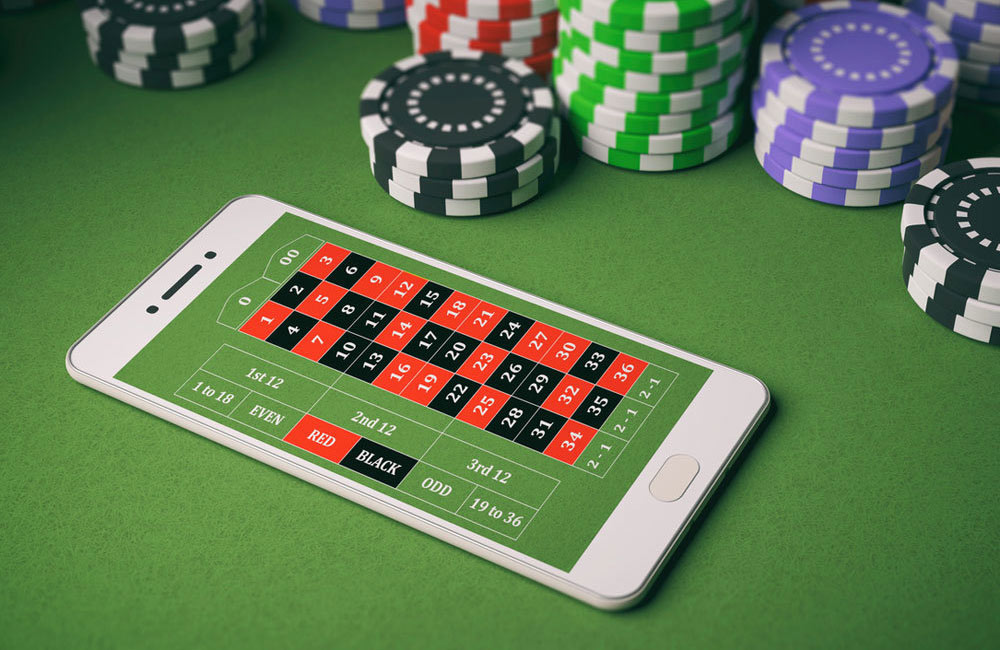
Probability is the bedrock of all casino games. Every spin of the roulette wheel, every shuffle of the deck, and every reel on a slot machine operates on principles of chance. Secure gambling math involves meticulously calculating these probabilities for every possible outcome. For example, in roulette, the probability of the ball landing on any single number is one divided by the total number of pockets, factoring in the presence of zero or double zero. Casinos rely on these precise calculations to set odds and payout structures.
While individual game outcomes are random, the law of large numbers dictates that over an extended period and across thousands of bets, the actual results will converge towards the calculated probabilities. This is why the house edge, derived from these probabilities, consistently favors the casino. Player success in the short term is a result of variance and luck, but the underlying mathematical security ensures that the casino’s advantage prevails in the long run.
The Role of Random Number Generators (RNGs)
In modern online and land-based casinos, Random Number Generators (RNGs) are the unsung heroes of secure gambling math. These sophisticated algorithms are designed to produce sequences of numbers that are unpredictable and statistically random, mimicking the unpredictability of physical processes like dice rolls or card shuffles. The integrity of an RNG is paramount to ensuring fair play, and casinos invest heavily in certified and audited RNG systems.
These RNGs are tested and certified by independent third-party organizations to guarantee their fairness and randomness. This rigorous testing process is a key security measure, providing players with confidence that the outcomes of their games are not manipulated. The mathematical principles behind RNGs are complex, but their purpose is simple: to ensure that every game result is genuinely independent and unbiased, forming a critical component of secure gambling math.
Mathematical Strategies and Player Advantage
While the house edge is a statistical certainty, some players explore mathematical strategies to try and mitigate their losses or enhance their winning potential. Card counting in blackjack, for instance, is a strategy based on tracking the ratio of high to low cards remaining in the deck to gain a statistical advantage. However, casinos are well aware of such strategies and employ countermeasures to maintain their inherent mathematical security.
It’s important to distinguish between strategies that merely manage bankroll and those that attempt to alter the underlying probabilities. The latter are often difficult to implement successfully against a casino’s security measures and mathematical foundations. Ultimately, even with strategic play, the inherent mathematical advantage of the casino remains the dominant factor in the long-term outcomes of gambling. Understanding these mathematical realities is crucial for responsible play.
Havok Bike Park and the Thrill of the Ride
While Havok Bike Park is renowned for its exhilarating downhill mountain biking experiences, the principles of probability and calculated risk are subtly present, though distinct from casino gambling. Riders assess their skills against the difficulty of trails, making calculated decisions about which lines to take and which jumps to attempt. The park’s infrastructure, including lift operations and trail maintenance, relies on meticulous planning and resource management, akin to how casinos manage their operations.
The thrill at Havok Bike Park comes from mastering a challenging environment through skill, preparation, and a calculated approach to risk. Unlike the fixed mathematical advantage in casinos, success here is determined by a rider’s ability to adapt, execute techniques, and overcome physical and mental challenges. The security in the context of Havok Bike Park is in the robust safety measures and well-maintained trails, ensuring an enjoyable and secure experience for all riders exploring the park’s diverse offerings.

Comments are closed